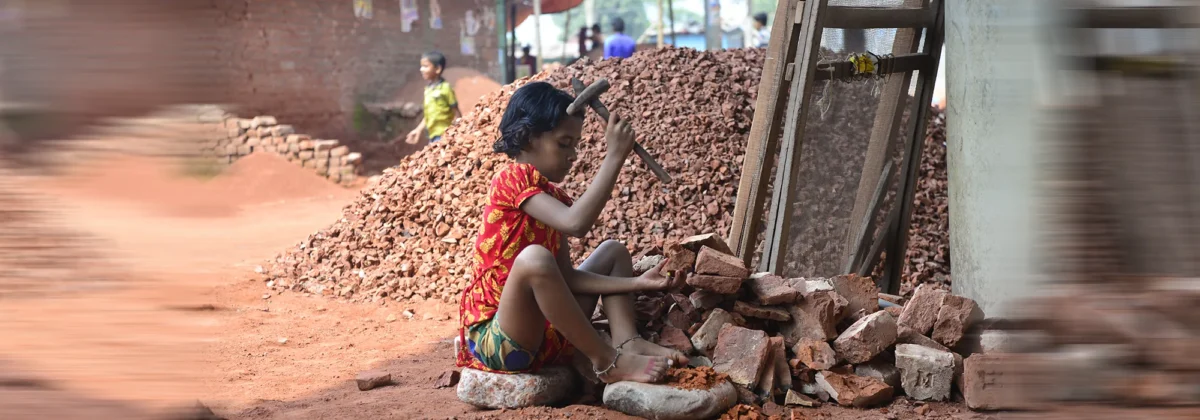
The European Union plans to crack down on forced labour by banning products made by victims of modern slavery.
The proposals cover products made in the European Union (EU) and imports that use such labour. They target goods in both the private economy and those made with the help of state support.
Sustainability
“In today’s geopolitics, we need both secure and sustainable supply chains,” Commissioner for Internal Market Thierry Breton said: “We cannot maintain a model of consumption of goods produced unsustainably.”
In fact, the Commission estimates that almost 28 million people worldwide are forced into labour.
EU customs authorities aim to take a risk-based approach to compliance and enforcement. That will include investigating suspicious products and policing EU borders. In fact, where customs officers cannot gather sufficient information on certain goods, they can ban them based on the facts they have been able to collate.
In addition, the Commission plans to provide business with detailed guidance once the rules have been finalised and passed by the European Parliament. The proposals have been published.
Forced labour
The rules follow on from the US Uyghur Forced Labor Prevention Act that is aimed specifically at blocking trade in products made in China under forced labour. The Financial Times reported that these measures and other potential trade barriers could force some organisations to restructure their supply chains. The European Union Chamber of Commerce in China said that businesses were increasingly bringing production home, close to consumers or to allied countries, the paper said.
The UK’s Modern Slavery Act came into effect in 2015. In fact, section 54 of that act says that commercial organisations must prepare a slavery and human trafficking statement for each financial year.” That statement must publicly disclose how businesses combat slavery in their supply chains.
Questions to consider
IRM published a guide to the UK Modern Slavery Act back in 2015, but this may still provide a useful starting point for businesses who have yet to fully tackle the issue. Businesses and risk professionals can seek to answer or pose ten key questions to get started:
- In which industries do you operate?
- In which countries do you operate?
- Can you trace every stage of production process for your goods?
- What is the composition of your workforce?
- What do you know about how the workers in your supply chain are paid?
- What do you know about how the workers in your supply chain are recruited?
- What does your policy state?
- How does your business factor legal and fair labour costs into production and sourcing costs to avoid the need for cheaper labour in the supply chain?
- Who in your organisation is responsible for slavery and human trafficking?
- What KPIs have you set to track your progress?