by Ryan Price, Dylan Campbell and Grant Griffiths
This piece picks up where an earlier blog post, Crisis in the Middle East – Energy Prices and Geopolitical Risks, published on 9 March, left off. That article looked at the wider crisis through the lens of geopolitics, energy prices, and the strategic importance of the Strait of Hormuz (the strait), arguing that disruptions in this narrow maritime corridor can quickly spill far beyond the region. This piece examines the next step and asks a more practical question: what happens to global supply chains when the disruption does not clear quickly, constraining the flow of essential commodities for weeks rather than days?
At its simplest, and taking a first principles approach, the situation can be framed as a mass-balance problem: if less material leaves a system than enters it, material accumulates until the physical constraints of the system (i.e., its storage capacity) reaches its limit and force production to a halt. The effective shutdown of shipping through the Strait1 has created exactly this kind of pressure across the global commodity complex, specifically the global energy system. More than just a regional disruption, it’s a stress test for a world built around tightly synchronized supply chains, lean inventories, and the assumption that critical commodities will keep moving on time.

What makes this event so striking is that, in practical terms, flows through the strait have been reduced to almost zero in both directions. That phenomenon has no real precedent in the modern era. The consequence is straightforward but severe: commodities that cannot be shipped eventually become commodities that cannot be produced once storage reaches its limit. Likewise, commodities that cannot be produced cannot be consumed. In other words, the problems do not remain localised; they spread globally. They move upstream into production and then downstream into consumption.
Storage is finite. It is designed to accommodate and to absorb normal volatility, such as production plant outages, storms, or temporary transport disruptions, not a prolonged breakdown of one of the world’s most important maritime chokepoints. By the time of writing, the disruption had lasted more than 70 days, or about 10 weeks, making it one of the largest supply-and-movement shocks ever imposed on commodities in such a concentrated way.
Although hydrocarbons such as crude oil and specifically transportation fuels are the most immediate focus, the same logic applies to a wider set of commodities produced in or routed through the region. The chokepoint matters not just for oil, but for a broader industrial ecosystem.
• liquefied natural gas (LNG)
• liquefied petroleum gas (LPG)
• fertilizers and other petrochemical products
• sulphuric acid
• helium
• others
As noted above, commodities that are not produced eventually become commodities that cannot be consumed, and the system must rebalance somehow. That rebalancing can happen through inventory drawdowns, demand destruction, or both. A useful reference point is the 2019 pandemic lockdown period, when global oil demand fell by roughly 8 million barrels per day on average in 20202. That drop required extraordinary changes in daily life and economic activity.
• widespread work-from-home mandates
• the near-total cancellation of global flights
• sharp and sustained reductions in mobility
Those globally coordinated behavior changes were required to produce an 8 million barrel-per-day reduction in consumption. Today, the world is facing a supply loss of a similar order of magnitude, and over time, that gap also has to be balanced. Inventories provide limited buffers as they can only delay the adjustment, and strategic reserves may soften it for oil, but they cannot eliminate it indefinitely. For commodities such as fertilizers, helium, or sulphuric acid, the buffer mechanisms are even more limited.
Another important nuance with this particular event is that this shock is not evenly distributed. During the pandemic, the demand response was broad and global. In this case, the burden falls much more heavily on net-importing regions that rely on seaborne supply chains. Areas with domestic production, export flexibility, or alternative routing options may feel less strain, while others will face a much sharper adjustment. In practical terms, some regions may ultimately need a demand response that is larger than that experienced during the pandemic.
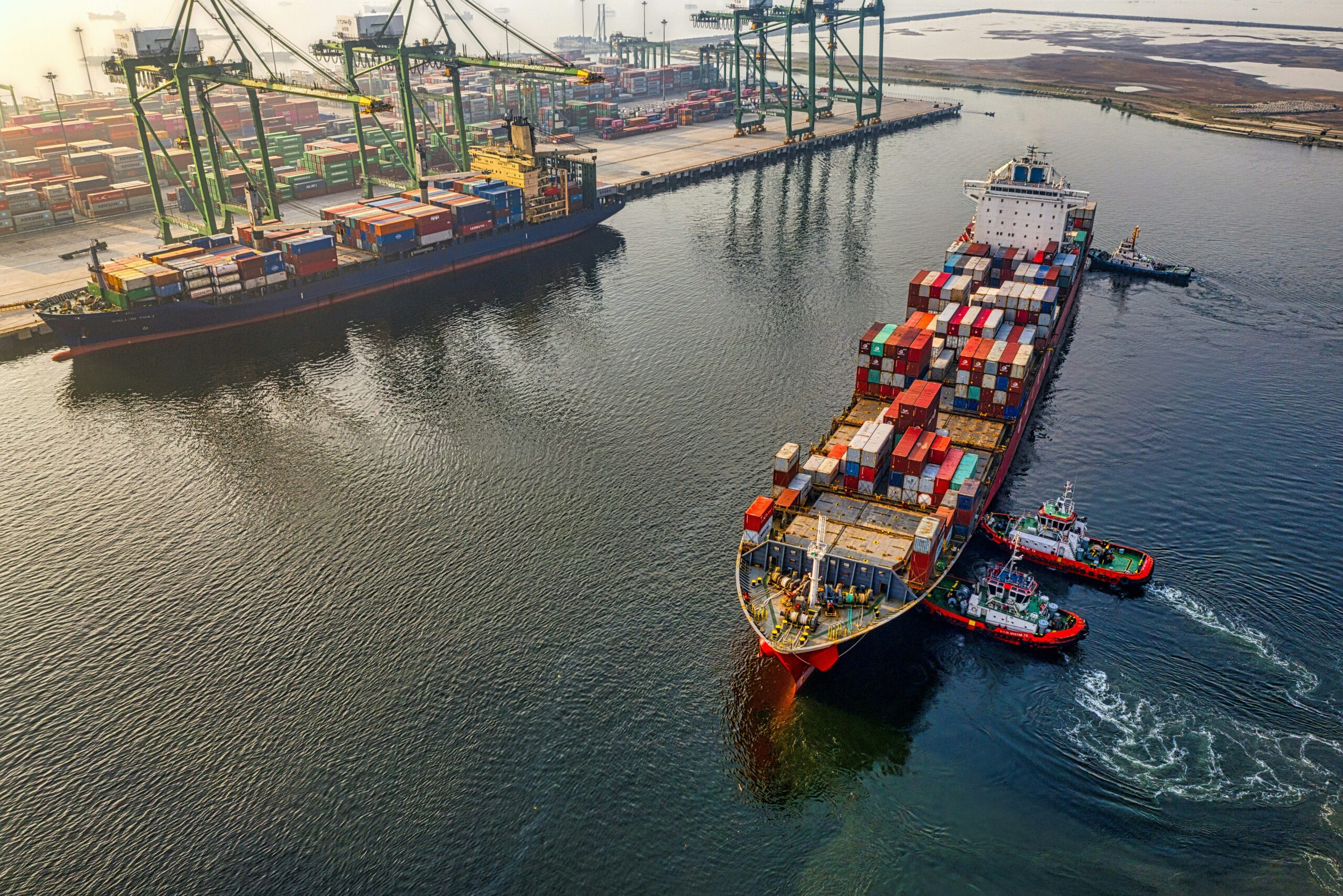
There are also important second- and third-order effects. If materials sourced through the Strait are used elsewhere to produce essential goods that are then shipped back into the Gulf countries, the disruption compounds over time. One example of this is food systems. The Gulf produces little of its own food supply. External disruptions to the export capacity of food-producing nations with product bound for the Gulf may possibly produce an indirect impact that could become more severe than the initial fuel shock.
Any forward-looking regional analysis should begin with the same set of questions: how much inventory is available, how quickly it is being depleted, how long would replacement cargoes take to arrive once flows resume, and how intense will competition be when multiple regions try to refill at the same time? A mass-balance framework does not answer every question, but it is the right place to start.
Australia offers a useful case study because reasonably transparent public information exists on inventories, prices, and supply conditions. For this example, the focus is on heavy and light duty transportation fuels:
• petrol (gasoline)
• diesel
• jet fuel
The table below3 summarizes estimated starting inventories for these fuels at the beginning of the disruption.
A supply chain that leans on a single waterway is not resilient — it is simply waiting for its worst day.
| Fuel type | Estimated inventory at start of disruption | Notes |
| Petrol | about 36–46 days | A single-point estimate is around 40 days. |
| Diesel | about 29–35 days | A single-point estimate is around 32 days. |
| Jet fuel | about 29–30 days | A single-point estimate is around 30 days. |
A rough working assumption is that about one-quarter of these fuels are exposed, directly or indirectly, to disruption through the strait. On that basis, each week of lost movement equates to roughly two days of inventory depletion. Using that rule of thumb, it is possible to sketch the drawdown and demand-response challenge Australia may face.
Let’s start with the damage already done. As of 8 May 2026, the restriction had been in place for 70 days, or 10 weeks. If demand had not adjusted meaningfully, that would imply roughly 20 days of supply already absorbed through inventory drawdown alone.
The next question is what recovery looks like once the constraint is lifted. According to Amena Bakr, Head of Middle East Research at kpler4, even an optimistic normalization scenario could take months as trapped vessels clear and trade flows rebuild. If resupply were to recover gradually over roughly three months, the average shortfall during that ramp-up period could still amount to about half of normal flow. In simple terms, that would add another meaningful drawdown burden before conditions truly normalize.
Sandwiched between the current disruption and a fully normalized market sits another problem: transit time. Even after flows resume, cargoes still need to reach their destination. A transit lag to Australia of roughly seven weeks would imply about 14 additional days of inventory depletion if demand remains broadly unchanged during that period.
Put together, the rough math looks like this:
Current drawdown: 10 weeks × 2 days/week = 20 days
Resupply transit lag: 7 weeks × 2 days/week = 14 days
Ramp-up deficit: 12 weeks × 50% × 2 days/week = 12 days
Total estimated drawdown: 46 days
Compared with the inventory ranges shown earlier, that estimate suggests Australia is unlikely to bridge the gap through existing system flexibility alone. A substantial demand side response would probably be required, especially if resupply is delayed or competition for replacement cargoes intensifies. Australia is not alone; other regions across the world face similar challenges.

Transportation fuel consumption is not evenly elastic. Petrol and jet fuel may prove more elastic because discretionary travel, leisure activity, and some business travel can be reduced more readily. Diesel is different. Its role underpinning freight movement and much of the “last mile” delivery system that keeps goods moving through an economy cannot simply be switched off in the event of a supply-side disruption, given the critical nature of food and essential supplies. Demand is far less flexible in any realistic scenario.
One possible counterargument is that replacement cargoes from the United States could offset some of the fuel shortfall. In practice, that looks less convincing. Transit times from the US to Australia can approach 60 days, which limits their usefulness in the near term. Even then, Australia would be competing with other affected regions for the same barrels, so there is no guarantee that enough supply would be redirected to where it is needed most.
Policies that suppress fuel prices through subsidies, lower taxes, or excise relief may reduce immediate financial impact to the public, but they also weaken the price signal that would normally encourage earlier demand adjustment. If inventories eventually fall to critical levels, demand destruction will still happen; it will simply arrive more abruptly. In Australia, retail petrol prices have thus far remained relatively stable, suggesting that large-scale behavioral adjustment has not yet begun. Public information on fuel supply from the Australian government also indicated in early May that stocks were at normal levels and forward import orders were broadly within expected ranges, even as the global disruption persists.
The broader concern is that public perception may still not be in line with the scale of the risk. If populations are not prepared for what a sustained supply disruption could mean, future shortages may become harder to manage, not easier.
The cracks are starting to form. As an example, recent statements from the Indian government5 (and others) calling for Indians to work from home, travel less, and conserve fuel are reminiscent of pandemic-era requirements. The variable resupply lags will remain even after supply resumes. The world may have come to terms with the first-order effects of this disruption, but given the “business as usual” approach adopted by most nations up until now, it seems unlikely that the risk of second and third-order effects is fully appreciated and being mitigated. Perhaps this is the market pricing in a speedy resolution to the conflict, or perhaps it is pricing in a belief that a system shock such as this will balance out of the global supply chain as supply systems adjust to the impact.
Time will tell who is right.
References:
- https://mscio.eu/media/documents/Update_028_-_JMIC_Advisory_Note_5_April_FINAL.pdf
- https://www.eia.gov/todayinenergy/detail.php?id=46596
- Australian Government PM&C, Public information on fuel supply
- https://podcasters.spotify.com/pod/show/oilgroundup/episodes/Amena-Bakr-on-the-Market-Blindness-to-the-13-Million-Barrel-Shock-e3idmck
- https://www.zerohedge.com/commodities/modi-urges-indians-conserve-fuel-oil-shock-spreads