The film Pressure and what it can teach risk managers about influencing decisions, authored by Tom Clare, CFIRM.
Pressure is not a film about risk management, but it might just be one of the better depictions of its purpose that I have seen.
The film follows Group Captain James Stagg, the meteorologist who was responsible for advising General Dwight Eisenhower on the weather forecast ahead of the D-Day Landings, which were originally planned for 5 June 1944. Stagg and the forecasting teams were working with imperfect information, competing forecasting methods, and significant uncertainty. Their advice led to postponing the original plan and then identifying a window of imperfect weather for it to take place on 6 June.
An important clarification is due at this point. I am in no way comparing the average risk meeting to D-Day planning. No one needs that level of professional self-importance, as most of us are not starting our Monday morning leading a debate to postpone the liberation of Europe. The stakes are usually rather lower than that, despite how some governance packs can feel.
But the underlying problem of the story is much more ordinary – a decision must be made, the evidence isn’t complete, people are disagreeing, and there’s enormous momentum behind one course of action. Decision-makers want something firmer than the evidence can legitimately offer, and someone is going to have to walk into the room to explain what we know.
The lesson is not that every organisation needs its own James Stagg, solemnly arriving at the committee with an inconvenient forecast. It is that risk matters most before uncertainty has been converted into commitment. Our value is not principally in giving uncertainty a score. It lies in helping organisations interpret incomplete evidence, recognise when momentum distorts judgement and make a conscious choice about what comes next.
That feels much closer to the purpose of risk management than many of the activities to which we routinely give the name.
The risk register would not help
Picture someone trying to reduce the problem faced by the Allies into typical risk language
| Risk | Likelihood | Impact | Rating | Response | Owner |
| Adverse weather prevents successful execution of D-Day | Possible | Severe | Amber | Monitoring and forecasting | Supreme Allied Commander |
Everyone can then thank Stagg for his contribution to the operation and continue preparing for 5 June.
It looks ridiculous because it is.
But if we strip out the historical context, is something similar happening across organisations? We capture risks, sort them, score them, aggregate them and report them. Risk managers spend significant effort ensuring risks are expressed consistently and sent through the proper governance structures. How many of us have spent a remarkable amount of time debating whether the risk is a 12 or a 15?
But all this effort leaves an important question hanging – did risk change the decision?
This isn’t a call for every risk team to be stopping things and blocking progress. The point for us in risk is to not obstruct, but to provide influence. Risk managers should improve an organisation’s ability to make good decisions under uncertain conditions.
Sometimes that’s slowing down, changing course, or accepting a position that feels riskier than we would like. Sometimes, as Stagg advises, it means proceeding despite conditions being less than ideal because they are still better than the alternatives.
To me, that is a far richer idea of risk management than simply identifying things that could go wrong.
Risk arriving before the decision
Risk can often arrive too late. A strategy is developed, commitments are made, budgets set, announcements are readied, delivery starts moving – then someone asks for the risks. By this point, the psychologically important decision may have already been made, and risk becomes an exercise in describing uncertainty around a direction that has already been chosen.
This is very different from using risk to shape the choice itself.
This matters because organisational momentum is significant. Once time, reputations and resources have been invested, contrary evidence becomes much harder to hear and process.
This shifts the question. Rather than “what does the evidence tell us to do?”, it becomes “can you give us enough confidence to do what we already intend to?”
Organisations rarely have a complete absence of information. Most are now drowning in data, reports, dashboards and updates. The harder problem is deciding what deserves attention, and being willing to change course where it points somewhere uncomfortable.
Even then, the organisation may no longer be psychologically available to take it on. Evidence is not entering a neutral decision process. It collides with plans, promises, identities and reputations. Risk therefore must do more than transmit information but help influence the choice. This is exactly when independent judgement and challenge become most valuable, but also the most uncomfortable.
The inconvenient specialist
Pressure dramatises the tension between expertise and organisational desire. Stagg cannot offer certainty. No one can. But he can offer judgement about uncertain evidence.
Perhaps we in risk sometimes undermine ourselves by believing credibility can come from certainty. We have advocated for precise scores, heat maps, thresholds and scales that can make uncertainty look far tidier than it is. Whilst these tools can offer a helpful way to report summaries, the danger comes when this representation begins to look like certain knowledge.
A risk rated at 23 is not better understood than one at 18. A RAG rating cannot tell a decision-maker what to do. An elaborate governance process or methodology cannot create evidence that isn’t there.
Organisations rarely have a complete absence of information. Most are now drowning in data, reports, dashboards and updates. The harder problem is deciding what deserves attention, and being willing to change course where it points somewhere uncomfortable.
Professional judgement is hugely significant but can carry a price.
If you provide judgement, you can be wrong. If you merely administer a process correctly, failure can always belong to someone else. Becoming the person who accurately records what everyone else thinks offers a strange professional safety. The minutes were correct, the register was updated, the process was followed, Column G of the register remains magnificent. No one can criticise the risk manager – but did anyone particularly need them?
The uncomfortable possibility is that some of our professional machinery can protect the risk practitioner more reliably than the decision.
Leaving a mark on a decision
Does the profession face an uncomfortable choice for the future? Do we believe we should leave a mark on a decision? This isn’t about making the decision. Accountability should always remain where it belongs, but risk should influence how it is made.
We do this through:
- challenging assumptions
- exposing weak evidence
- providing alternative interpretations
- asking what needs to be true for this to succeed
- understanding what can be addressed, what will have to be tolerated, and
- communicating this in a way someone making the decision can use.
This is not administrative support, but intellectual work. It needs technical understanding, curiosity, communication, organisational awareness and the confidence to say something inconvenient when it matters.
It also needs humility. The expert is not always right. In the film, there were competing techniques and genuine disagreement. Forecasting in 1944 was an incredibly difficult task, and the narrow window on 6 June was not perfect, but it was sufficient for the operation to proceed.
This makes the story far more interesting. Stagg’s job was not to possess certainty, but to help a leader make a hugely consequential decision without pretending certainty existed.
Does this suggest a more useful definition of the profession? Perhaps risk isn’t principally about managing risks at all. Perhaps it is about helping organisations make important decisions when nobody has enough information to be certain.
Viewed this way, risk suddenly becomes much broader. Risk management then connects with decision science, behavioural psychology, probability, strategy, systems thinking, organisational culture and the dynamics of power.
It changes what we ask. Not just “what are the risks?”, but;
- What decision are we trying to make?
- What are we assuming?
- What evidence supports this?
- What would change our minds?
- What happens if we wait or act?
- What might be influencing our decision?
- Are we still choosing, or are we defending an existing commitment?
These questions belong in the room when a decision is being made, not six months after everyone has become emotionally attached to the answer and is asking for the risk register.
Evidence of process and evidence of influence
Within the risk profession, we can become very good at demonstrating that our processes took place – capturing risks, completing assessments, reports, and ensuring reviews took place. None of this is without value. However, evidence that a risk process occurred is not always the same as evidence that it influenced a decision. The distinction matters. Process can create the opportunity for challenge and reflection, but it cannot substitute for them.
Some of the most valuable risk management may be the ten-minute conversation at the side where someone spotted an assumption that isn’t holding, and no one has challenged it. It could be the question that causes a team to stop before converting an ambition into a commitment, or what would require a change of course.
This makes the effectiveness of risk much harder to measure, because it is easier to count completed risk reviews than decisions improved. But difficulty does not make the easier thing more important. When we face uncomfortable conversations, we always have the time-honoured instinct of falling back on perhaps an extra “Top 5” could fix it.
Before the weather turns
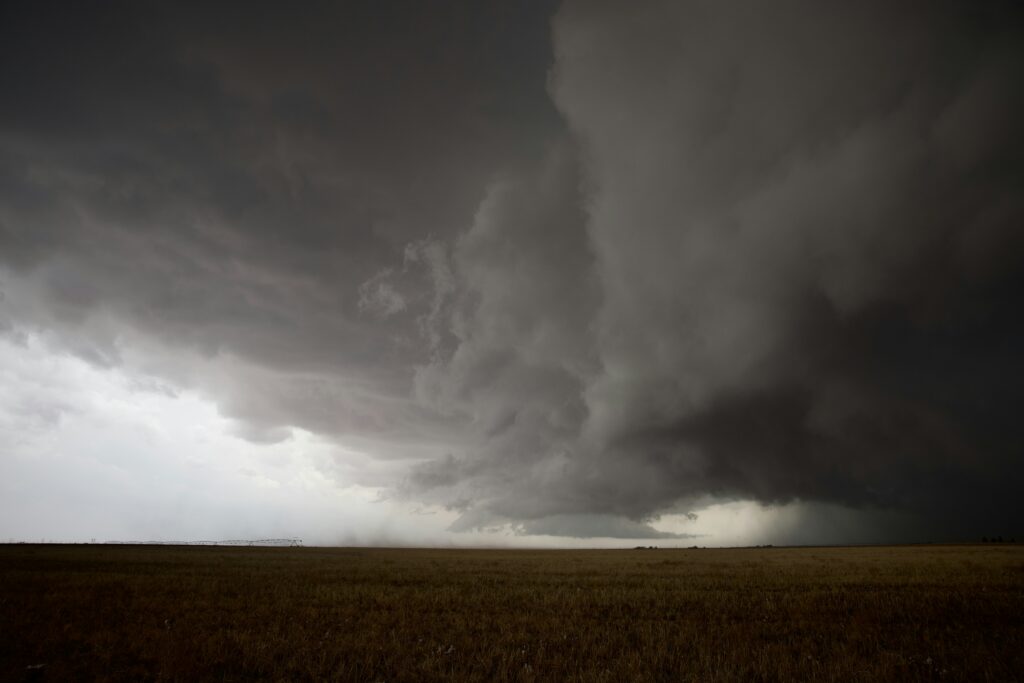
Weather forecasting has been transformed by technology to a level that forecasters of 1944 could hardly have imagined, but the human problem remains – information arrives, it is incomplete, different interpretations can be made, someone has to understand what it means, and someone needs to decide what to do.
Risk management operates exactly in this space.
We should judge risk less by the elegance of the paperwork surrounding the decision and more by the quality of thinking we help bring to the discussion.
- Did we help identify something early enough?
- Did we challenge assumptions before they were set as commitments?
- Did we help leaders understand trade-offs?
- Were we prepared to say something inconvenient?
And vitally, did the organisation make a more conscious choice because risk management was present?
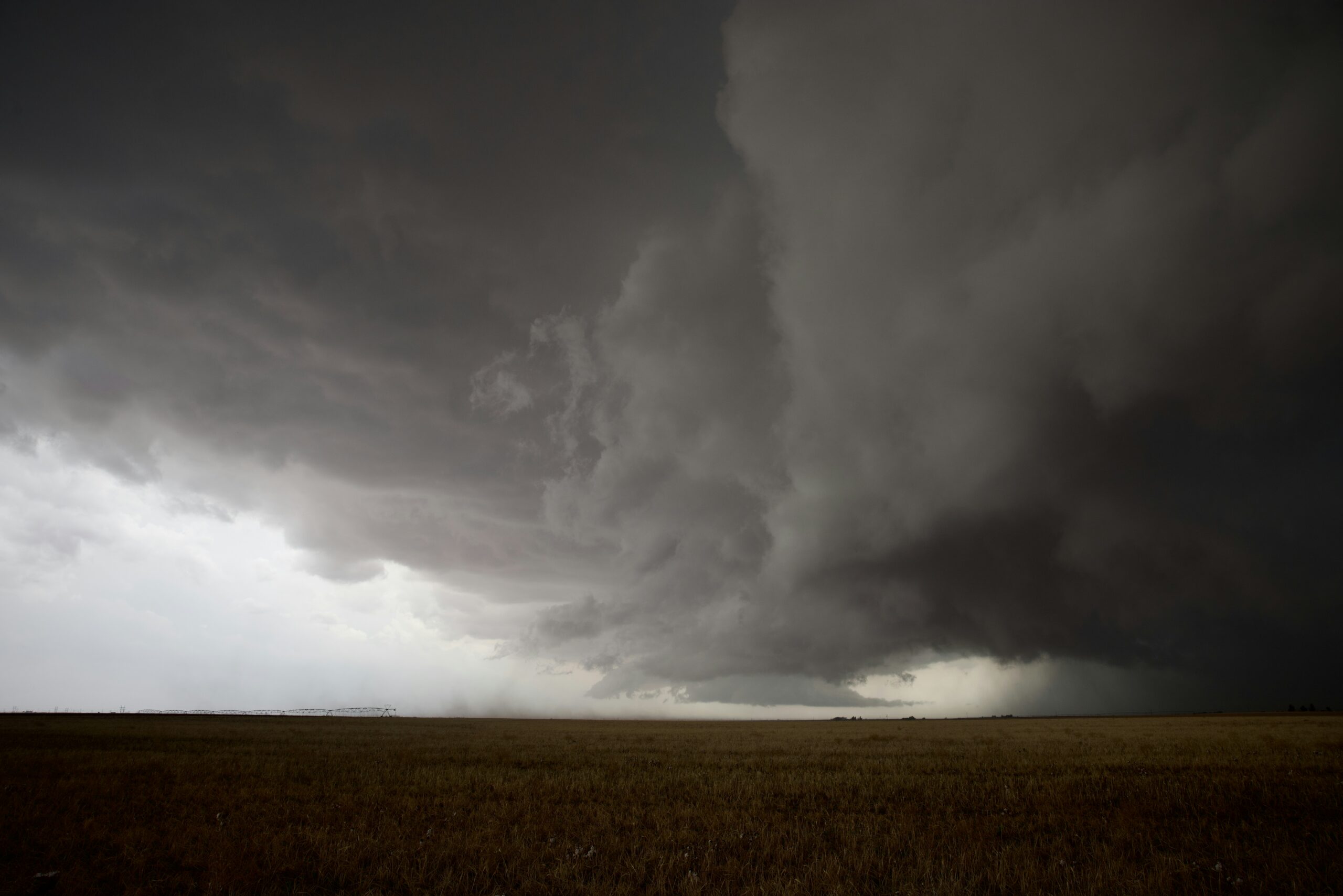
The weather does not care what colour the box was on the register. Neither does the future.
If all we have contributed is a beautifully formatted heat map explaining why events happened exactly as people thought they might, we may have misunderstood the task in the first place.
Still, nobody could fault the formatting.
Are you interested in reading more from Tom Clare, CFIRM? Check out his recent article on The human side of risk Management.